7 Important Facts: Do You Have to Pay Financial Aid Back?
It can be a stressful situation to pay for college with all the rising tuition, rent, books, and more. These expenses are often subsidized with financial aid to help many students afford them. But, before taking any financial aid package, one important point to understand is, “Is financial aid repayable?”
Sometimes it’s not an easy answer. There are some types of financial aid that are considered “free” and do not have to be repaid. The others are loans that are payable following graduation or when you leave school. Being able to distinguish the two could help you with making financial decisions and avoid future debts.
This guide will outline how financial aid works, what types are available, and some considerations students have to make before accepting financial aid.
Understanding Financial Aid
Financial aid is financial assistance given to students to help them attend college. It may be provided by the federal governments, state schemes, colleges, private groups or lenders.
Financial aid can be used to pay for:
- Tuition fees
- Housing costs
- Books and supplies
- Transportation expenses
- Meal plans
- Other educational costs
Financial aid is available in various forms, and the financial obligations for various types of aid are different.
The first thing every student should know
There’s one big mistake that students make, and that is assuming that all financial aid is free.
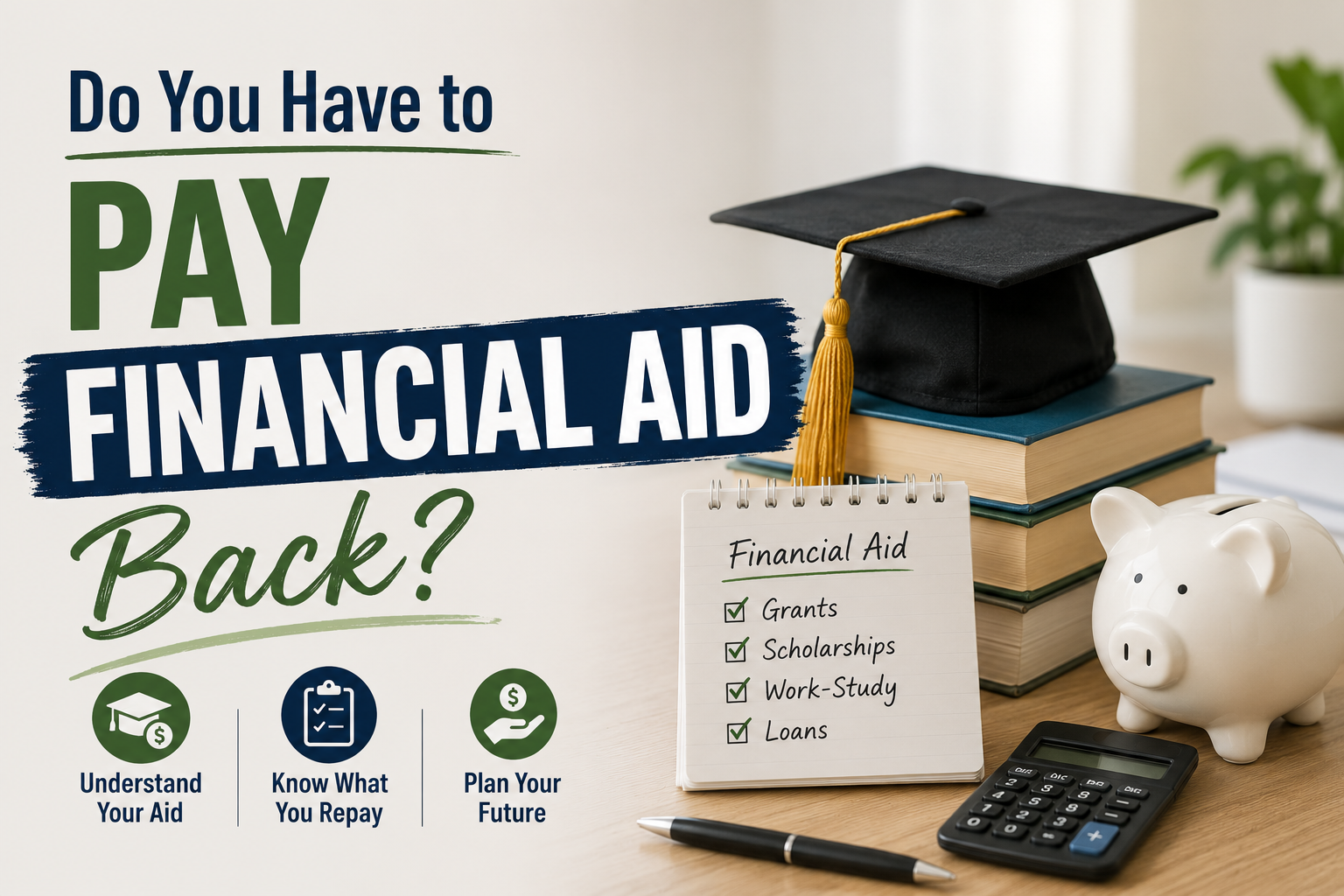
In fact, there are two big categories of financial aid:
The first are grants, scholarships and work study programs that usually don’t need to be repaid.
The second category involves student loans, or loans that are borrowed that typically have to be paid back.
It is important to be aware of the category of the financial aid before accepting it.
The grants are typically free funds that you can use to finish the project.
One of the best types of financial aid is a grant, which is typically not repaid.
Grants: Usually Free Money
Students frequently tend to apply for grants to lessen the loan burden.
While grants usually don’t require repayment, there are cases in which repayment might be required. For instance, if a pupil drops out of school before the end of the term or is unfit to receive the grant, then part of the money could be recouped.
Luckily, these situations are rather rare.
Scholarships: Financial Aid You Usually Keep
Scholarships are also a type of financial aid that are typically not required to be paid back.
Scholarships will be offered on the basis of:
- Academic achievement
- Athletic ability
- Leadership skills
- Community service
- Artistic talent
- Special interests
Scholarship money is gift aid, as opposed to loans. Students typically retain the funds without having to repay them as long as they keep passing any requirements for the scholarship.
Scholarships can be one of the most advantageous options for paying for college for many students.
Work Study Programs: Earn While You Learn
A work-study program provides students with a means to get paid while in school.
Students are generally involved in part-time employment, either on or close to campus, and earn wages for their work.
As the money is obtained from work, there is no repayment necessary.
There are a number of advantages of work study. Students can get a taste of the workforce, have a chance to develop professional skills, and diminish their need for student loans.
This is a great option for many students who need financial assistance and/or are preparing for a career later.
Student Loans: Financial Aid That Must Be Repaid
When individuals inquire whether they have to pay financial aid back, they are likely referring to student loans.
Student loans are different from grants and scholarships: They are money borrowed.
The funds are loaned and are generally required to be repaid as per the conditions of the loan.
After graduating from school, most borrowers of student loans start their repayment after:
- Graduating
- Leaving school
- When the number of students enrolled is less than the minimum requirement.
Interest may also build up over the period of time, depending on the type of the loan.
Students need to make sure they know what to expect when repaying a loan and read the terms and conditions carefully before taking on the loan.
Federal vs. Private Student Loans
Some student loans are better than others.
Federal student loans are often provided by federal programs. They tend to have more flexible repayment terms and borrower protections.
Private student loans come from banks, credit unions or private lenders. The interest rates, terms and conditions of these loans could be different.
Research federal aid before taking out private loans is a common financial advice.
Knowing about the differences will enable students to make informed borrowing decisions.
Situations Where Financial Aid May Need to Be Returned
While most grants and scholarships are not loans that need to be repaid, there are a few exceptions.
A student will be required to repay financial aid when:
They Withdraw From School
Eligibility and repayment requirements may result from leaving school prior to the end of a semester.
Failure to meet program requirements
There are some aid programs that will require that students meet certain academic requirements.
They Receive Excess Aid
In rare cases, a school may overestimate a student’s eligibility for aid.
In such cases, the additional amount may have to be refunded.
When a student’s enrollment status changes, the student should always contact their financial aid office.
How to Avoid Unnecessary Student Debt?
Many students leave school with modest amounts of debt since they exercise great fiscal prudence while they are in school.
Some effective strategies are:
Research and apply for Scholarships on a frequent basis
There are a lot of scholarships that aren’t as competitive as they seem.
Maximize Grant Opportunities
Financial aid applications that are filled out properly and on time can help to improve the odds of receiving financial aid.
Consider Part-Time Employment
Earning income while enrolled in school will decrease the need to borrow.
Choose Affordable Schools
Savings can be realized in education costs which translates to less debt incurred upon graduation.
Be sure to borrow just what you require
This is not to say you need to take the full amount if it is offered for a loan.
The little loans you take out now can add up to a big burden when it comes time to pay off your debt.
Examining common misconceptions about financial aid.
Common Myths About Financial Aid
Myth 1: All financial aid is free
While some financial aid comes with no obligation to pay it back, loans will have to be paid back.
Myth 2: Only Low-Income Students Qualify
There are a wide variety of financial aid programs available for students with different financial situations.
Myth 3: Scholarships are only awarded to the very best students
There are scholarships available for academics, sports, leadership, hobbies, community service and more.
This myth suggests that student loans aren’t much of a problem.
Myth #4: Student Loans are not a big deal
Loans can impact your finances for years after leaving school.
Knowing these myths will enable students to make informed decisions.
Questions to Ask Before Accepting Financial Aid
When you are considering taking any financial aid package, think about asking:
- Is this a grant, scholarship or loan?
- Is it due to be repaid?
- At what time do you need to start repayments?
- Is interest charged?
- What is one to do if one leaves school?
If you know the answers, it will help you avoid any surprises in the future.
Final Thoughts
Thus, is the financial aid repayable? It depends on the kind of assistance that you get. The main source of financing (grants, scholarships, and work-study) has no repayment obligation. But student loans are borrowed money and typically will need to be repaid once you’re done with the school or after graduation.
When considering financial aid offers, take the time to find out exactly what you are being granted. It’s important to understand the differences between gift aid and loans so you can make the best decisions, minimize future debt and create a healthier financial future.
FAQs
Are grants payable back?
Most grants are not required to be repaid except if you do not meet certain program requirements or drop out of school before the requirements for the program are met.
Are scholarships considered a loan?
In general, scholarships are not considered “repayment” and do not have to be paid back.
Do student loans come in the form of financial aid?
Yes. Student loans are a widely used type of financial aid, but they have to be paid back.
What should I do if I don’t go to college?
Leaving school could impact financial aid eligibility and could start the repayment of student loans.
What can I do to minimize student loan debt?
One way to minimize borrowing is to apply for scholarships, grants, and work part-time, as well as attend a cost-effective school.