Can You Trade in a Financed Car?
People who have a monthly payment on a vehicle loan may have an important question to ask: can you trade in a financed vehicle? The answer to this question is – yes, you can trade in a financed vehicle. But it’s not always an easy process, and it will depend on your loan amount, car value, and dealership offer.
A lot of people sell their financed cars so they can move up to a better vehicle, cut costs on their monthly payments or trade in to a different vehicle that is of better fuel efficiency. However, before you make a decision, it is imperative that you know how the process works and financial effects it can produce.
This in-depth guide will teach you all about the ins and outs of car trading, what might happen, the dangers involved, and some wise strategies to assist you in getting the greatest deal.
Is It Possible to Trade In a Financed Car?
It is possible to trade-in a financed vehicle even if it is still being paid off to the lender or bank. Financed cars are a common occurrence at dealerships so this is not a new or unusual thing.
But what matters is how much your car loan is compared to how much your car is worth. This comparison is used to answer the question of whether or not the trade is beneficial.
If you have a high value on your car as compared to your loan then you’re in good shape. Conversely, if the car’s value is greater than what you have paid, you could end up with negative equity.
Knowing about Positive and Negative Equity
There are two important financial concepts that you should know before car trading: positive equity and negative equity.
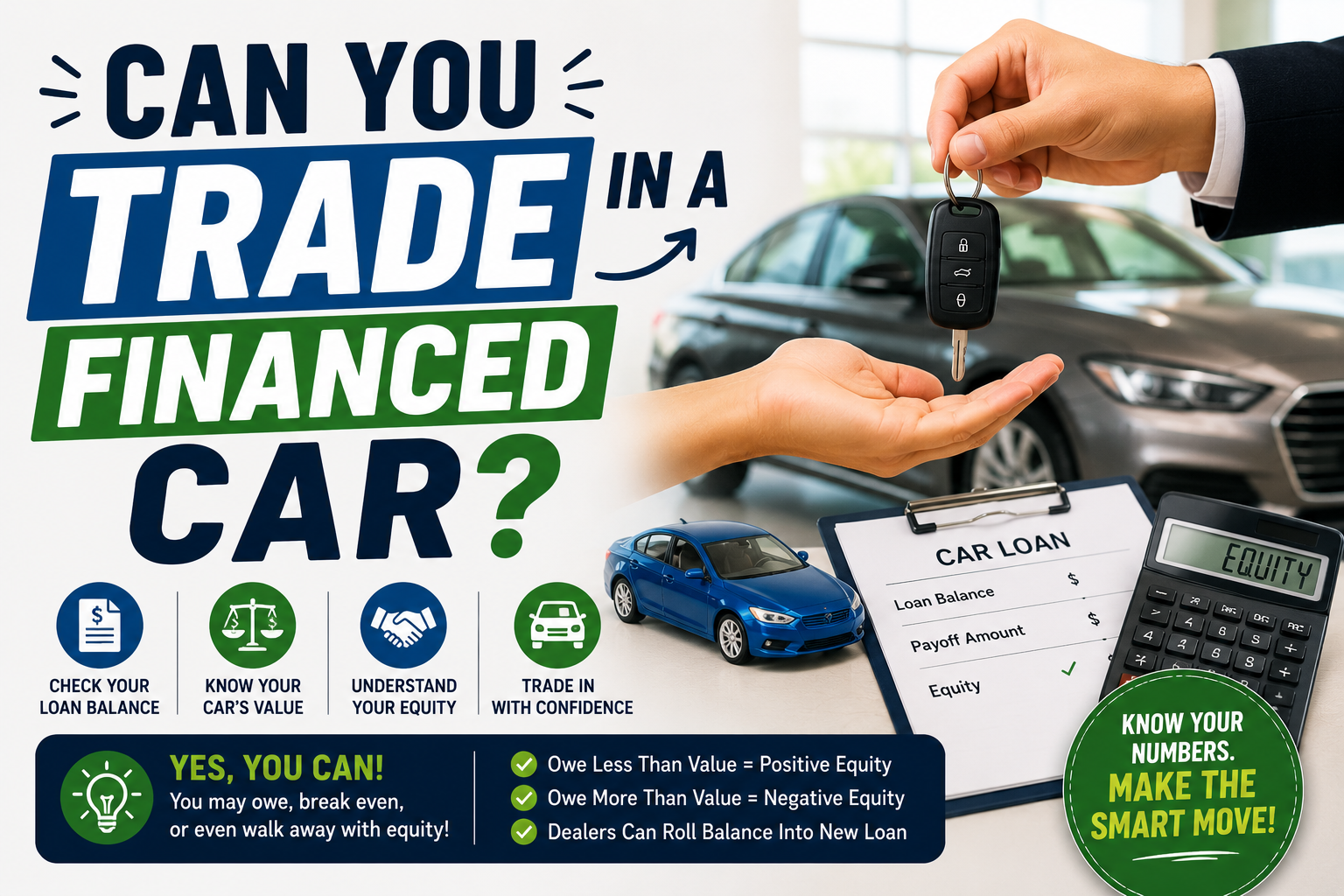
Positive equity is when the car’s value exceeds the outstanding balance of the loan. For example, if your car is worth $12,000 and you owe $9,000, you have $3,000 positive equity. This can be applied to the purchase of your next car.
If your loan is for more than your vehicle is worth, you will have negative equity. For example, if your car is worth $10,000 but you owe $13,000, you have $3,000 negative equity. This sum is not removed, it is added to your new car loan.
It’s crucial to be aware of this distinction as it can have a significant impact on your finances.
How is trading in a Car Financed?
There are some steps involved in the process of trading in a financed vehicle.
First, the dealership will request your loan payoff amount from your lender. The total amount you need to pay to completely close your loan.
They will then check your car and estimate its trade-in value, taking into account the demand and condition of the market, the condition of your car, mileage, and model year.
Afterwards, the dealership deducts the value of your car loans from the value of your car that you are trading in.
If the value of your car exceeds the amount of the loan, the excess value will be credited towards the purchase of your new vehicle. In the event that you owe more, the amount is transferred to your new loan.
This process enables you to transfer your car without having to settle your debt on the previous vehicle first.
Example of a Trade-In Calculation
Let’s get to know about a simple example.
Suppose your car is worth $11,000 and the value of your car loan is $8,000. In this situation, you will have $3,000 positive equity. This can affect the cost of a car or bring down your monthly payments.
Now, think of another situation. Your car is worth $10,000, but you still owe $13,000. In this instance, you are $3,000 in negative equity. This will be placed on top of your new loan, and will increase your monthly payments.
As you can see from this example, it’s crucial to know the value of your vehicle prior to trading it in.
People trade in financed cars for a number of reasons
There are a variety of reasons why people opt to sell their financed vehicle. One very common reason is upgrading to a more modern model that offers improved features, safety and fuel economy.
Some people sell their cars for a lower monthly payment, by selling to someone for a lower price. Some may go for a lifestyle change, for instance, due to family size, need for a job, or long-distance travel.
Sometimes, the answer is just to get rid of high maintenance vehicles or any potential repair problems.
Risks of Trading in a Financed Car
The convenience of car trading is coupled with risks, which is the case in trading a financed car.
The biggest risk is negative equity. When you roll over your unpaid loan into your new car loan, you could find yourself in a worse situation in the end. This is an added expense and deduction from your monthly payment.
The other risk is taking a lower trade-in value. Dealerships generally do not pay as much as private parties, so you may not receive as much as you would if you were to sell it privately.
Plus, if you lengthen your loan for old debt, you may end up in debt for a longer period than you anticipated.
Smart Tips Before Trading Your Car
If you are going to sell your financed car, you need to be properly prepared.
First, consult your lender for a loan payoff amount. This will provide you with a good indication of your remaining debt.
Then, use dependable car valuation tools to find out the current market value of your vehicle. This will help you determine if you are in positive or negative equity.
Cleaning the car, correcting minor problems and keeping good service records are also something that you should do. A well-maintained car usually fetches a better trade-in price.
When shopping for a dealership, it’s also wise to look at several quotes before they decide. This way, you will be getting the best deal.
Lastly, attempt to find the new car and trade-in value independently. This will avoid any confusion and make it easy to understand the true worth of your transaction.
Should or not you make a tradeoff an outright financed vehicle?
It may be good to trade in a financed car if carefully done. This is particularly beneficial if you have positive equity or are looking to make an upgrade in a hurry.
But if you’re in negative equity, you’ll want to think carefully before doing so. Debt rollover may contribute to greater burden over the longer term.
The best option will vary based on the vehicle’s condition, how much money you have available, and your future plans.
Final Thoughts
So, will you be able to trade in a financed car? Yes, you most certainly can! It is a standard practice that can be done by most dealerships.
But the success is dependent on knowing your loan balance, car value, and equity. Planning ahead, trade in your financed car can be a way of upgrading your lifestyle, or lower monthly payments.
It’s important to take time to shop around and make a choice that is going to help your financial well-being in the future. Preventing financial problems in the future with a smart move today.
Common questions and answers (FAQs)
Is it possible to trade in a financed vehicle that has poor credit?
Yes, you can trade in a financed car even if you have bad credit. Your loan approval and interest rate may be lower, however, and the terms of your new loan may not be as favorable.
What happens if I owe more than what my car is worth?
Negative equity (the amount owed more than the value of the car) is included in the new car loan. This will result in higher loan and payment amounts.
Should I be paying off my car or should I trade it in?
It may be good to pay off the car before trading as you can be full owner of the car. But, of course, you can still trade it in if necessary when you’re financed.
Are there any “gateway” or “break-in” restrictions on buying?
Yes, but not typically. The value of new cars drops rapidly and you may have negative equity as soon as you buy the vehicle.
Do dealerships pay off my loan when I trade in a car?
Yes, the dealership contacts your lender and pays the remaining balance of your loan as part of the dealership’s trade-in.
Is it bad for your credit to trade in a financed vehicle?
It might have a modest short-term effect, but can have a positive impact on your financial situation if managed well. Making your new loan payments on time helps you to build good credit.