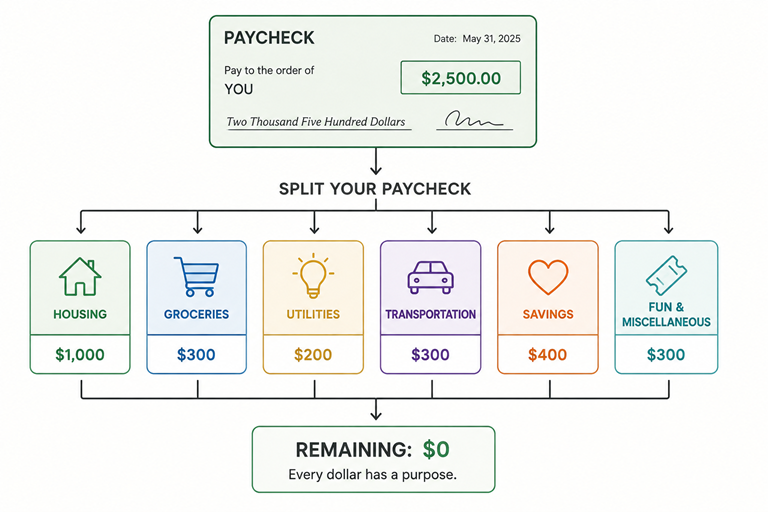
Common Budgeting Mistakes and How to Avoid Them (I’ve Made Almost All of Them)
Okay, real talk. I have built and abandoned more budgets than I’d like to admit. Spreadsheets with color-coded tabs. Apps I downloaded, used for eleven days, then forgot existed. A notebook where I wrote “NO SPENDING WEEK” in capital letters and then ordered takeout that same night because I was too tired to cook.
If any of that sounds familiar, you’re not broken, and you’re definitely not alone. When I actually sat down and dug into what’s out there — bank blogs, financial advisor sites, Reddit confessions, Quora threads, even a Dave Ramsey call-in segment — the same 15 or 20 mistakes kept showing up over and over, just phrased differently. And that’s actually good news, because it means budgeting failure isn’t some personal character flaw. It’s a handful of very fixable, very predictable traps.
So let’s walk through the common budgeting mistakes to avoid, why they happen, and — more importantly — how to fix budgeting mistakes once you’ve already made them (because you probably already have).
If you’re earning a low income, I’ve written a comprehensive post on how to budget on a low income, you might want to check it how, https://loonnews.com/how-to-budget-money-on-a-low-income/.
Why Most Budgets Fall Apart (It’s Not Just You)
Here’s something that made me feel a lot better when I found it: over half of U.S. adults admit they don’t actually follow a consistent budget, and nearly 60% say they don’t follow one at all, according to a U.S. Bank study cited by The Motley Fool. Meanwhile, the average American household spent $77,280 in 2023 — a 51% jump from just a decade earlier — which makes it way harder for old budget numbers to hold up in today’s economy.
So if you’ve ever felt like a failure for “quitting” your budget, consider this your permission slip to stop beating yourself up. Nearly everyone struggles with this. The difference between people who eventually get it right and people who don’t usually comes down to knowing which mistakes to watch for.
Let’s get into them.
Section 1: The Mistakes That Sink You Before You Even Start
Mistake #1: Guessing Your Numbers Instead of Tracking Real Spending
This is the big one. It’s the mistake almost every article, video, and forum thread leads with, and honestly, it’s the one I made first too.
I used to sit down, think about what I “usually” spent on groceries, round it to a nice clean number, and call it done. Except I never accounted for the coffee runs, the random Target trips, or the “just one thing” Amazon orders that somehow turned into four things. Sound familiar? One financial writer described a friend who divided her income “the way she thought made sense,” then couldn’t figure out why she kept blowing through her limits every single month.
The fix: Before you set a single number, pull two or three months of real bank and credit card statements — a full year if you can manage it. Go line by line and sort everything into needs, wants, and those sneaky irregular purchases. Use an app, a spreadsheet, or even a plain notebook. The tool doesn’t matter nearly as much as using your actual numbers instead of vibes.
Mistake #2: Budgeting Off Your Salary Instead of Your Take-Home Pay
This one trips up a lot of people early in their careers. You get a job offer for $4,000 a month and you’re thrilled — but by the time taxes, health insurance, and retirement contributions come out, you’re actually taking home closer to $3,000. If you budget off that bigger number, you’re going to feel broke every single month, even though nothing’s technically wrong.
The fix: Always build your budget around your net income — the number that actually lands in your bank account. If you freelance or juggle multiple income streams, set aside 25–30% for taxes right off the top, since nothing’s being withheld for you automatically.
Mistake #3: Forgetting the Expenses That Don’t Show Up Every Month
You crush your budget in January, feel like a financial genius, and then February hits and you totally forgot about your annual Spotify renewal, or your car registration, or that birthday gift you always buy your sister. These “irregular” expenses are budget killers because they feel like surprises even though they happen every single year, like clockwork.
The fix: Go back through a year of statements specifically hunting for annual or occasional charges. Take something like a $600 yearly insurance premium and divide it into a $50/month line item, so it’s already accounted for. Better yet, set up a “sinking fund” — basically a separate savings bucket you feed a little bit into every month, specifically to absorb these costs when they land. I do this now for holiday gifts and it has genuinely saved my December.
Mistake #4: Setting a Budget So Strict You Can’t Actually Live It
Here’s a scenario that’s painfully relatable: “I’m going to save $800 a month, never eat out, and never buy coffee again!” Great plan — until week two, when your friends invite you out and you’re already over budget and spiraling with guilt.
An overly restrictive budget sets you up to fail almost immediately, and that failure triggers guilt, which is usually what makes people scrap the whole system rather than just tweak one category. One financial guide put it really well: rigid budgets create burnout, vague ones offer no guardrails, and the successful ones sit somewhere in between — structured, but forgiving.
The fix: Start small. Build in a realistic amount for fun spending instead of cutting it to zero. If your goal is to save more, aim for just a little more than last month — say 2% — instead of a dramatic overnight overhaul. Treat your first month or two as a calibration period, not the final answer.
Section 2: The Mistakes That Sabotage Follow-Through
Building the budget is honestly the easy part. Sticking with it is where most people — myself included — actually lose the plot.
Mistake #5: Setting the Budget and Never Checking Back In
I’ve done this. I built a gorgeous spreadsheet once, felt very proud of myself, and then didn’t open it again for six weeks. By the time I checked, I had no idea where the money had gone. One finance blog described this perfectly: creating a budget is only half the work, and never checking in on it is one of the most common mistakes people make.
The fix: Check in weekly, not just at the end of the month. A ten-minute Sunday review can catch small overspending before it snowballs into a real problem. If you’re the type who forgets, an app that auto-categorizes your spending removes a lot of the friction.
Mistake #6: Treating Your Budget Like a One-and-Done Document
Life changes constantly, but a lot of people build a budget once and never touch it again — even after a raise, a move, a new relationship, or an unexpected expense. A budget that doesn’t reflect your actual life becomes useless fast, and that’s often exactly what makes people abandon it altogether.
The fix: Schedule a recurring review — monthly at the very least, or every pay period if your income varies. Any time something major shifts in your life, revisit the numbers. Think of your budget less like a finished project and more like a living document you keep editing.
Mistake #7: Not Automating Anything
Without autopay, it’s way too easy to miss a bill, rack up a late fee, or watch your credit score take a hit. And without automatic transfers into savings, “saving money” basically depends on whatever’s left over after everything else — which, let’s be honest, is usually nothing.
The fix: Put your essential bills on autopay. Set up an automatic transfer into savings that hits right after payday, before you have the chance to spend it. This is the classic “pay yourself first” move, and it works because it takes willpower completely out of the equation.
Section 3: The Emotional Side of Budgeting Mistakes
This is the part most budgeting advice skips over, but it might be the most important section in this whole post.
Mistake #8: Forgetting to Budget for Savings and Emergencies
Over half of Americans can’t cover a surprise $1,000 expense, which is exactly why “not saving for emergencies” shows up on nearly every list of budgeting mistakes I found. Savings often gets treated as an afterthought — whatever’s left at the end of the month — instead of a real line item.
The fix: Treat savings like a fixed bill, the same category as rent or your car payment, not a leftover. Automate it (see Mistake #7) so it’s not something you have to decide on in the moment. Most sources recommend building toward 3–6 months of living expenses in a separate, high-yield savings account.
Mistake #9: Quitting Entirely After One Bad Month
This is the mistake that gets me the most, because I think it’s the one that quietly ends more budgets than anything else on this list. You overspend one month — maybe it was the holidays, maybe it was a rough week — and instead of just adjusting and moving forward, you decide the whole system is broken and give up.
There’s a well-known moment where a caller told Dave Ramsey she felt ashamed after blowing her Christmas budget, and his response was essentially: stop beating yourself up and start moving forward again. One overspending month doesn’t erase months of progress.
The fix: Reframe budgeting as a long-term practice, not a pass-or-fail test. When you slip up, reassess and adjust next month instead of scrapping the whole system. As one credit union’s guide put it, budgeting isn’t about perfection — it’s about awareness and progress.
Mistake #10: Budgeting Alone When Your Finances Are Shared
If you split finances with a partner and only one of you is building and enforcing the budget, resentment tends to creep in fast — especially if spending starts happening in secret. That secrecy erodes trust, which erodes the budget right along with it.
The fix: Build the budget together. List out fixed and shared expenses jointly, and talk openly about goals. A lot of couples find success giving each person a small “no questions asked” fun-money allowance inside the shared budget — it cuts down on friction while still keeping the big picture aligned. If money conversations feel tense in your relationship, it might help to check out loonnews.com/money-talks-for-couples for ways to make those conversations less stressful.
Section 4: The “Hidden” Mistakes Nobody Talks About Enough
Mistake #11: Subscription Creep
The average American reportedly spends around $1,000 a year on subscriptions — and roughly $200 of that goes toward services they don’t even use. Streaming platforms, AI tools, shopping memberships, gaming subscriptions — they pile up quietly because they’re billed automatically and rarely cross your mind.
To be fair, it’s not entirely on you. Plenty of companies deliberately make cancellation a hassle, so this isn’t purely a discipline issue.
The fix: Do a quarterly audit of your statements specifically looking for recurring charges. Cancel what you’re not using, and consolidate anything that overlaps. If you want a deeper walkthrough, loonnews.com/how-to-audit-your-subscriptions covers this step by step.
Mistake #12: Lifestyle Creep
This one’s sneaky because it feels like progress. You get a raise, and suddenly you’re eyeing a nicer apartment or a new car — and a year later, you’re earning more but somehow no better off financially. There’s also a quieter version of this happening right now: prices are rising even when your habits haven’t changed, so the same budget covers less than it used to.
The fix: Every time your income goes up, increase your savings rate right along with it, rather than only increasing spending. Add new expenses one at a time instead of upgrading your whole lifestyle at once. The 50/30/20 rule — 50% needs, 30% wants, 20% savings — is one of the most commonly cited guardrails for this, and it’s a genuinely solid starting point if you don’t know where else to begin.
Mistake #13: Confusing “I Can Afford the Payment” With “I Can Afford the Purchase”
Just because a monthly payment fits comfortably into your budget doesn’t mean the purchase itself is a good deal. High interest rates — especially anything north of 18% — can quietly inflate the real cost of something way beyond its sticker price, especially if you’re only making minimum payments.
The fix: Before financing anything, calculate the total cost including interest, not just whether the monthly number fits. Be extra cautious with buy-now-pay-later options on things you don’t actually need right now.
Section 5: The Big Fix Underneath All the Little Fixes
If there’s one thing that ties every single mistake on this list together, it’s this: most budgeting advice assumes perfect discipline and zero emotional spending — basically, ideal behavior. Real life doesn’t work that way. Decision fatigue is real. Emotional spending is real. And a budget that doesn’t account for that is a budget that’s designed to fail.
The fix isn’t more willpower. It’s fewer decisions. Automate what you can. Build in a little flexibility on purpose. Use tools that check in with you instead of a spreadsheet you have to remember to open. And when you slip — because you will — treat it as data, not a verdict on your character.
So, What Budgeting Mistakes Should You Actually Watch For?
If you only remember five things from this whole post, make it these:
You’ll want to track real spending instead of guessing, budget off your take-home pay instead of your salary, build in room for irregular expenses, keep your goals realistic, and actually review your budget on a regular schedule. Everything else on this list tends to flow from getting those five right.
And if you haven’t started budgeting at all yet — that’s genuinely the biggest mistake of the bunch, according to nearly every source out there. As one financial expert put it, the only way to know if your budget needs adjusting is to actually have one to adjust in the first place. An imperfect, rough-draft budget beats no budget every single time.
If you’re just getting started, our guide over at loonnews.com/how-to-build-your-first-budget walks through building a simple version from scratch, no spreadsheet expertise required.
Final Thoughts
I’m not going to pretend I’ve got this perfectly figured out, because I don’t think anyone truly does. I still overspend some months. I still forget an annual renewal every once in a while. The difference now is that I don’t scrap the whole system when it happens — I just adjust and keep going.
That’s really what fixing budgeting mistakes comes down to: not perfection, just fewer surprises and a little more grace with yourself along the way.