Why Is the Zero-Based Budget the Best Method of Budgeting?
The first time someone told me to try zero-based budgeting, I got the wrong idea entirely. I heard “zero-based” and pictured spending my entire paycheck down to nothing every month, which sounded like a terrible way to build savings. I almost skipped the whole thing because of that one misunderstanding.
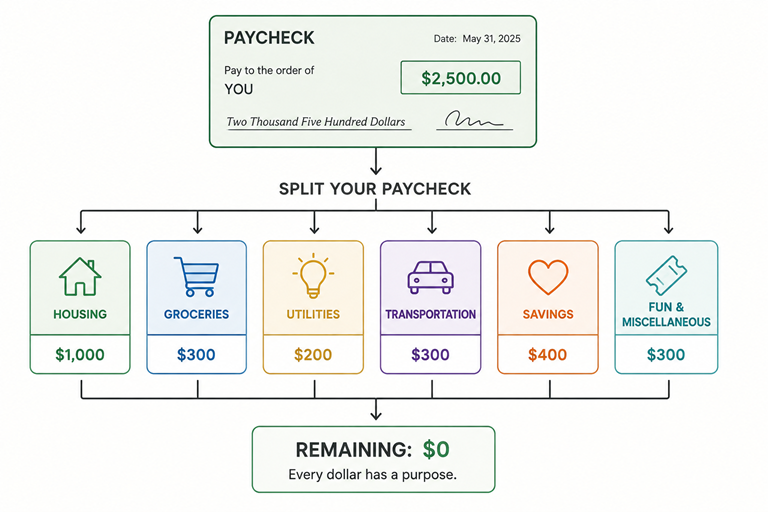
Turns out, that’s the single most common mix-up people have about this method, and once it clicked for me, everything changed. Zero-based budgeting doesn’t mean spending everything. It means assigning everything — including your savings, your debt payoff, your “fun money,” all of it. The “zero” refers to unallocated income, not an empty bank account.
I’ve used a version of this system for a few years now, on and off, through a debt payoff stretch and later while saving aggressively for a car. So this isn’t a theory piece — it’s what I’ve actually learned running the numbers myself, combined with what consistently shows up across trusted sources like YNAB, Ramsey Solutions’ EveryDollar, and the endless debates in communities like r/personalfinance and r/YNAB. Let’s get into why zero-based budgeting personal finance content keeps calling this “the best” method — and where that claim genuinely holds up, and where it doesn’t.
What Zero-Based Budgeting Actually Means
Here’s the plain-English definition: income minus expenses equals zero. “Expenses” here is a broad word — it includes your bills, groceries, debt payments, savings contributions, investing, and your discretionary spending. Every single dollar you bring home gets a job before the month starts. If there’s money left over on paper, it doesn’t just sit there unaccounted for — it gets assigned somewhere, even if that “somewhere” is just extra savings or a buffer category.
I want to repeat this because it trips up so many people: the zero is a planning zero, not a spending zero. You’re not draining your checking account. You’re making sure nothing goes unplanned.
Interestingly, this method didn’t start as a personal finance trick at all. It actually originated in the 1970s as a corporate and government budgeting technique — most notably tied to Peter Pyhrr’s work at Texas Instruments, and later applied in Georgia state government under Jimmy Carter. The original idea was that every department had to justify its entire budget from scratch each cycle, rather than just tweaking last year’s numbers up or down. Personal finance took that same “justify every dollar” philosophy and shrunk it down to a household level, which is where tools like YNAB and EveryDollar come in — the two names that show up constantly whenever this topic gets discussed.
A Real Zero-Based Budgeting Example
I think examples explain this method faster than any definition can, so here’s a simplified version close to what my own budget looked like during a debt payoff phase, based on a $4,000 monthly take-home income:
| Category | Amount |
|---|---|
| Rent/Mortgage | $1,200 |
| Utilities | $200 |
| Groceries | $500 |
| Transportation | $450 |
| Minimum debt payments | $150 |
| Extra debt payoff | $300 |
| Emergency fund | $300 |
| Retirement/investing | $400 |
| Health/personal care | $100 |
| Subscriptions/entertainment | $100 |
| Dining out/fun money | $200 |
| Clothing | $50 |
| Gifts/miscellaneous | $50 |
| Total allocated | $4,000 |
| Remaining to assign | $0 |
Notice what’s happening in that table — debt payoff and savings aren’t leftovers. They’re line items, sitting right next to rent and groceries, treated with the exact same “non-negotiable” weight. That’s the entire philosophy in one table.
If your income isn’t fixed — freelancers and commission-based workers, I’m looking at you — there’s a variant worth knowing about, sometimes called “budgeting by priority.” Instead of assuming a set income figure, you list your categories in strict priority order (housing, food, utilities, minimum debt payments, then savings, then fun money) and fill them in as the money actually arrives that month. I’ve used this version myself during a slower freelance stretch, and it’s genuinely one of the biggest practical advantages zero-based budgeting has over rigid percentage-based systems — it doesn’t assume income that isn’t there yet.
Is Zero-Based Budgeting Good? The Case For It
It Kills “Mystery Spending”
This is the argument that comes up more than any other, across every type of source — blogs, YouTube, forums, all of it. Zero-based budgeting eliminates the unallocated pool of cash that quietly leaks into impulse purchases without you ever really deciding to spend it. When every dollar has a job, there’s no gray area for money to slip through. I noticed this almost immediately when I started — spending stopped feeling like something that “just happened” and started feeling like something I was actively choosing.
It Surfaces Waste That Broader Budgets Hide
Compared to something like the 50/30/20 rule, which just lumps everything into “wants,” zero-based budgeting forces a line-by-line look at spending. A 50/30/20 budget doesn’t care whether your “wants” bucket is $600 of dining out or $600 of a hobby — it’s all just “wants.” Zero-based budgeting doesn’t let categories hide like that. It’s exactly how I first noticed I was spending almost $90 a month on subscriptions I’d genuinely forgotten I had.
Savings and Debt Payoff Get Treated as Mandatory, Not Optional
One of the more powerful shifts I noticed personally: with zero-based budgeting, you can’t “save whatever’s left” at the end of the month — because for most people, that number is zero. Instead, savings and debt payoff are literal categories that need to be filled to reach zero, just like rent. This is a big reason Dave Ramsey’s debt snowball method is so often paired with EveryDollar’s zero-based approach — the structure forces the payoff amount to happen instead of hoping it happens.
It Adjusts to Real Life Every Month
Unlike a budget you build once and reuse forever, zero-based budgeting gets rebuilt every single period. A lighter grocery month can get reallocated straight to debt payoff. A car repair can get planned for in the exact month it’s needed instead of throwing off a fixed template. This monthly rebuild is a big reason it works especially well for people with variable income, seasonal expenses, or a life change in progress — a new job, a move, a new baby.
It Builds Real Financial Awareness
I’ll be honest, the first few months felt like homework. But sitting down monthly to assign every dollar built a level of awareness about my own money that I never had with looser tracking apps I’d used before, where I’d glance at a dashboard and not really absorb what it was telling me. This is basically YNAB’s whole philosophy — it’s less a spreadsheet trick and more a habit-building system.
It Works at Any Income Level
This one surprised me — zero-based budgeting isn’t just for people who are struggling. It’s frequently recommended for higher earners too, because lifestyle inflation (spending creeping up to match a bigger paycheck) is a very real risk once income rises. Zero-based budgeting forces a conscious decision about where the “extra” money goes — savings, investing, or lifestyle spending — instead of letting it quietly drift toward creep.
Advantages and Disadvantages of Zero-Based Budgeting (The Honest Version)
I don’t think it’s fair to call any single method “the best” without also being upfront about the downsides, and every credible source I’ve come across pairs its praise with real caveats. Here’s the honest side.
It Takes Real Time and Maintenance
The biggest and most consistently mentioned drawback: zero-based budgeting isn’t “set it and forget it.” You’re rebuilding the budget every month, and adjusting it in real time when a category runs over. This is, by far, the most common reason people quote in forums for abandoning the method after an initial burst of enthusiasm — myself included, the first time I tried it, before I came back to it later more prepared for the commitment.
It Can Cause Budget Fatigue
Assigning every dollar down to the last few bucks can genuinely feel exhausting, especially if detailed financial tracking isn’t your thing. Community discussion (the more candid kind, not the polished blog kind) talks a lot about “budget fatigue” — a strong initial burst of diligence that slowly erodes because the granularity is hard to sustain. It’s a real risk, and I don’t think it’s honest to pretend otherwise.
Irregular Expenses Need Extra Planning
Annual insurance premiums, car registration, holiday gifts, quarterly taxes if you’re self-employed — none of these show up every month, and zero-based budgeting doesn’t automatically account for them unless you build in what’s called a “sinking fund.” That’s a small monthly contribution toward a future lump-sum expense. This is the step I forgot the first time I tried this method, and it bit me — my budget looked perfectly balanced right up until a $400 car registration bill blew a hole in it.
It’s Not Exactly Beginner-Proof
If you’ve never budgeted at all, jumping straight into full zero-based allocation can be overwhelming. A lot of beginner-oriented content — and I’d agree with this from experience — suggests starting with something looser, like the 50/30/20 rule, just to build the basic habit of tracking before graduating to the more granular zero-based approach.
It May Be Overkill for Simple, Stable Finances
Here’s a counterpoint that doesn’t get said enough: if your financial life is already simple — stable income, low expenses, high automatic savings rate, no debt — you might get diminishing returns from the added monthly effort. Zero-based budgeting’s biggest value is surfacing waste and enforcing intentionality. If there’s not much waste to surface and you’re already intentional, the marginal benefit shrinks relative to the time it costs you.
It Can Create Friction in Shared Households
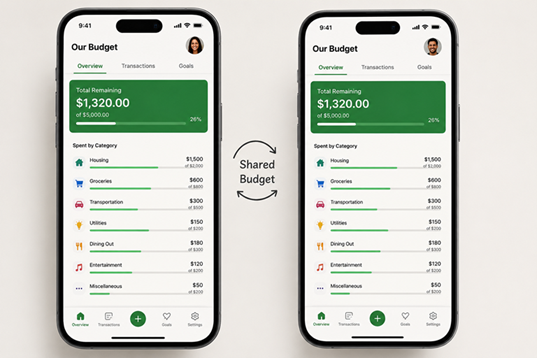
If you’re budgeting with a partner or roommate, every dollar needing joint assignment can create more friction than a looser system would — disagreements over how much “fun money” is fair, or whose category gets cut when the numbers don’t balance. This is worth thinking about before diving in as a couple without talking it through first.
How Zero-Based Budgeting Stacks Up Against Other Methods
Zero-Based Budgeting vs. the 50/30/20 Rule
The 50/30/20 rule — 50% needs, 30% wants, 20% savings/debt — is the method zero-based budgeting gets compared to more than any other. It’s simpler, faster to set up, and easier to stick with long-term, but its broad buckets can hide waste inside a category, and it doesn’t force line-item accountability the way zero-based budgeting does. My honest take, which lines up with what most comparison content lands on: 50/30/20 is a solid starting point for beginners, and zero-based budgeting is the upgrade for people who want maximum control, are paying off debt aggressively, or deal with irregular income.
Zero-Based Budgeting vs. Envelope Budgeting (Cash Stuffing)
These two aren’t really competitors — they’re more like a philosophy and a delivery method. Zero-based budgeting is the planning approach (every dollar assigned). Envelope budgeting, or the TikTok-famous “cash stuffing” trend, is one popular way of enforcing those assignments, using physical or digital envelopes per category. I’ve combined the two myself — zero-based planning on paper, then physical cash envelopes for the categories I tend to overspend in, like dining out. The physical act of running out of cash in an envelope makes overspending harder in a way a purely digital budget doesn’t.
Zero-Based Budgeting vs. Pay-Yourself-First
Pay-yourself-first budgeting automates a fixed savings or investing percentage right off the top and leaves the rest unmonitored. It’s the lowest-maintenance option out there — set the transfer once and stop thinking about it. The trade-off: it guarantees savings happen, but does nothing to control or optimize the rest of your spending, so waste in your discretionary money goes completely undetected. A hybrid a lot of people (including me) land on eventually: automate savings pay-yourself-first style, then zero-base whatever’s left of your take-home pay for full control over the rest.
For a deeper breakdown of automating savings the pay-yourself-first way, I’ve written more on that here: loonnews.com/pay-yourself-first-savings-guide.
How to Start Zero-Based Budgeting (Step-by-Step)
If you’re ready to actually try this, here’s the process I’d walk a friend through, based on how I built mine the second time around, after learning from my first attempt’s mistakes.
Start by calculating your total monthly take-home income. If your income is irregular, use the average of the last 3–6 months, or lean conservative and use your lowest realistic month as your base. From there, list every fixed expense — rent, insurance, loan payments, subscriptions — the stuff that doesn’t move. Then list your variable necessary expenses, like groceries, utilities, and gas, using your past spending as a rough guide.
Next, and this is the step I’d genuinely beg you not to skip: build sinking funds for anything irregular or annual — car maintenance, holiday spending, insurance premiums. Take the annual cost, divide by 12, and treat that as its own monthly line item. This single step would have saved me from that surprise registration bill I mentioned earlier.
After that, assign your savings and debt payoff as mandatory line items, not leftovers — a lot of people, myself included, list these before discretionary spending specifically to enforce that “pay yourself first within a zero-based framework” hybrid. Then allocate whatever’s left to your fun and discretionary categories until you hit exactly zero.
Throughout the month, track your spending against each category, and if something runs over, pull the difference from another category rather than letting the whole system slide — that reallocation move is really the defining habit of zero-based budgeting. Then, at the start of the next month, rebuild the whole thing from scratch, using what you learned about which categories ran over or under.
Mistakes People Actually Make With Zero-Based Budgeting
A few patterns come up again and again in forums and comment sections, and I’ve personally made at least two of these myself. Forgetting irregular or annual expenses is probably the most common one — a budget that looks flawless on paper right up until a predictable-but-unplanned cost shows up. Being unrealistically restrictive on fun categories is another big one, and it’s usually why people abandon the method — if the budget feels punishing instead of sustainable, it doesn’t last, which is exactly why a “guilt-free spending” category matters more than it sounds like it should.
Not adjusting mid-month is another classic mistake — letting the whole system fall apart the moment one category overspends, instead of simply reallocating from somewhere else. And treating your first month’s budget as final, rather than as a rough draft, trips a lot of people up too — it usually takes two or three cycles before your categories actually reflect how you really spend. Lastly, doing this alone in a shared household creates blind spots — if your partner’s spending isn’t part of the same process, the “zero” isn’t really accurate.
So, Is Zero-Based Budgeting the Best Method?
Here’s my honest answer, and it’s a conditional one rather than a blanket “yes.” Zero-based budgeting is genuinely one of the best methods if you want maximum control over your money, you’re aggressively paying off debt, you’re chasing a specific savings goal fast (this pairs really well with the kind of aggressive short-term saving covered in loonnews.com/how-to-save-money-fast), or your income is irregular and a fixed percentage-based system doesn’t reflect your reality.
It’s probably not the best fit, or at least not where I’d start, if your finances are already simple and stable, your savings rate is already high, and you’re not chasing a specific goal that needs extra intentionality. In that case, the added time cost might outweigh what you’d actually gain from it.
That conditional answer is really the honest one. Zero-based budgeting isn’t objectively “the best” for literally everyone — it’s the best for people optimizing hard for something, whether that’s debt freedom, a big purchase, or just wanting total clarity on where their money goes. If that’s you, it’s worth the learning curve. I’d know — it’s genuinely changed how I think about every dollar that hits my account.