Medical Courier Jobs: What They Actually Pay and How to Get Started
The first time I saw a video claiming someone made $2,000 a week driving three hours a day as a medical courier, I was immediately suspicious — and honestly, after digging into how this industry actually works, my suspicion was justified. That number isn’t impossible, but it’s not what a beginner should expect either, and I think anyone looking into medical courier jobs deserves the real picture, not the viral version.
So here’s what a medical courier actually is, what it really pays once you subtract gas and insurance, what certifications genuinely matter, and exactly how to get your first contract — whether you’re searching for medical courier jobs near me in a smaller market or looking at a major hub like Houston, Atlanta, or Las Vegas.
What Is a Medical Courier, Exactly?
A medical courier isn’t the same thing as an Amazon or food delivery driver, even though the day-to-day driving might look similar from the outside. You’re forming a genuinely critical, regulated link in the healthcare supply chain — moving sensitive, time-critical, and often confidential material between hospitals, commercial labs like Quest Diagnostics or Labcorp, doctors’ offices, nursing homes, and research facilities.
The cargo varies more than people expect. Pathology and laboratory specimens — blood vials, urine samples, tissue biopsies, cultures — often need a temperature-controlled environment, meaning coolers with gel packs or dry ice, not just a cardboard box on your passenger seat. You might also transport pharmaceuticals, specialized compounds, or emergency medications heading straight to a pharmacy, clinic, or patient’s home. Blood and blood products — plasma, platelets, whole blood units — come with strict chain-of-custody protocols you have to follow to the letter. Some routes involve durable medical equipment like oxygen tanks, wheelchairs, or hospital beds, and others involve confidential patient records and legal healthcare paperwork protected by federal privacy law. It’s a genuinely varied job, which is part of what makes it interesting once you’re actually doing it.
Core Requirements to Become a Medical Courier
Because you’re handling sensitive health data and biological materials, the barrier to entry sits a bit higher than standard food or package delivery gigs — though you still don’t need a college degree, which surprises a lot of people looking into how to become a medical courier for the first time.
Most logistics companies require drivers to be at least 21, mainly due to commercial auto insurance requirements, with a valid license and a clean or at least acceptable driving record — no major DUIs or a pile of speeding tickets. Because you’ll be entering restricted areas of hospitals, operating rooms, and pharmacies, passing a real background check and drug screening is standard practice, not optional.
Your vehicle matters too. It needs to be reliable and appropriately sized for what you’ll be hauling — a sedan works fine for lab specimens, but if you’re moving durable medical equipment, you’ll want a hatchback, SUV, or cargo van. You’ll need standard liability auto insurance at minimum, and some independent contracts specifically require commercial or non-owned auto liability coverage, so it’s worth checking exactly what a contract requires before you commit to it.
Medical Courier Certification: What Actually Matters
A lot of viral content overstates or misrepresents what’s legally required here, so let’s be precise. Professional healthcare logistics companies genuinely do look for a few specific credentials, mostly for liability reasons.
HIPAA compliance certification matters because couriers handle or transit near protected health information, and understanding the Health Insurance Portability and Accountability Act is essentially mandatory in this field — you can find official guidance directly from the U.S. Department of Health and Human Services if you want to understand what HIPAA actually covers before taking a paid course. OSHA Bloodborne Pathogens training is essential too, for anyone handling specimens that could potentially expose them to infectious waste — the Occupational Safety and Health Administration publishes the actual standards this training is built around. And if you’re transporting dry ice or specific chemical agents, basic DOT hazmat awareness training applies as well.
The good news: affordable online training bundles covering HIPAA and bloodborne pathogens certification, usually somewhere between $50 and $100, can be completed in a few hours and give you a downloadable certificate to attach to your resume or contractor profile. This single step is genuinely one of the fastest ways to separate yourself from uncredentialed applicants when you’re first getting started.
Real-World Pay: Is the Hype Actually True?
Let’s address this directly, since it’s the question everyone actually wants answered. Social media claims of making $2,000 a week working three hours a day as a beginner are largely exaggerated. High earnings are entirely possible in this field, but they require established routes, efficient fuel management, and often come with 1099 independent contractor status, where every expense is out of your own pocket before you see a dollar of profit.
Here’s how the pay structures actually break down. W-2 employee routes typically pay somewhere between $15 and $22 an hour. The company usually provides the vehicle or gas reimbursement and structured shift hours, but you get less scheduling flexibility in exchange. As a 1099 independent contractor working per route or per job, pay varies a lot based on distance, urgency, and cargo volume — routes can pay a flat rate of $75 to $200 or more, or a mileage rate averaging $0.60 to $1.00-plus per loaded mile. Specialized or urgent deliveries — stat emergency runs, or organ and radioactive pharmaceutical transports — command premium pay, sometimes scaling past $30 to $50-plus an hour or high flat rates, specifically because of the strict time constraints involved.
Calculating Your Actual Take-Home Pay
This is the part beginners consistently underestimate, and it’s the reason those viral income claims fall apart under scrutiny. If you’re an independent contractor, you have to subtract real operational costs from your gross revenue before you know what you actually made.
Driving 100 to 200 miles a day adds genuinely heavy wear and tear to your tires, brakes, and transmission — that’s not a hypothetical cost, it’s a bill that arrives eventually. Commercial or business-use auto insurance runs higher premiums than a standard personal policy. And as a 1099 contractor, you’ll need to set aside roughly 25% to 30% of your earnings for self-employment taxes, covering both federal and state obligations — a step a lot of new couriers forget until tax season arrives and it becomes a very unpleasant surprise. The IRS’s self-employment tax overview is worth a read before you start earning as a contractor, so you’re setting money aside from your very first paycheck rather than scrambling later.
Regional Spotlight: Where the Work Actually Is
Medical courier demand tracks pretty closely with hospital density, biotech presence, and the size of the local aging population, so where you’re located genuinely shapes what your day-to-day work looks like.
Medical Courier Jobs Houston
Houston is home to the Texas Medical Center, the largest medical complex in the world, which means the city offers a genuinely deep well of contract and employment opportunities across both urban and suburban sectors. Because routes often stretch between outer-ring suburbs and central medical institutions, a fuel-efficient vehicle is more of a priority here than in a more compact market.
Medical Courier Jobs Atlanta
Atlanta’s market is anchored by major health networks and the CDC, alongside numerous regional hospitals, which keeps demand steady. The city’s heavy traffic patterns mean couriers here have to genuinely plan delivery windows around peak congestion rather than winging it, since a stat delivery stuck in gridlock isn’t just inconvenient, it can breach the whole point of an urgent route.
Medical Courier Jobs Las Vegas
Las Vegas demand concentrates heavily around regional medical centers and specialized clinics, alongside a fast-growing local population. The market here offers steady night-shift and on-demand courier contracts moving lab specimens across the valley, which makes it a solid option if you specifically want flexible or off-peak hours.
If you’re searching more broadly for medical courier jobs near me outside of these three specific hubs, the same core dynamics apply anywhere with a meaningful concentration of hospitals and labs — it’s just a matter of finding which local logistics networks are actively hiring in your area.
How to Actually Get Started: A Step-by-Step Blueprint
Getting into this field works better as a strategic process than as a leap where you buy equipment first and figure things out later. Here’s the roadmap I’d follow if I were starting from zero.
Step 1: Secure Your Foundation
Make sure your license is clean, your vehicle is genuinely dependable, and you’ve got smartphone navigation ready to go. Then complete an online HIPAA and Bloodborne Pathogens certification course — this one step instantly separates you from uncredentialed applicants and signals to hiring managers that you’re taking the compliance side of the job seriously.
Step 2: Choose Your Operational Path
You’ve really got three routes here, and they suit different people. Route A is W-2 employment — the best option if you want guaranteed hours, zero marketing effort, and company-provided infrastructure while you’re still learning how the industry actually works. Route B is 1099 subcontracting, working for established regional logistics networks or local courier brokerages to build driving experience quickly while retaining more schedule flexibility than a W-2 role. Route C is starting your own independent business — forming an LLC, securing commercial business insurance, buying medical-grade coolers and biohazard bags, and pitching directly to local clinics, independent labs, and pharmacies. That third path has the highest ceiling, but it also requires the most upfront effort and risk tolerance.
Step 3: Widen Your Job Search Terms
Don’t limit your search to just “medical courier” — cast a wider net. Try medical delivery driver, specimen transport driver, healthcare logistics specialist, pharmaceutical delivery contractor, and lab courier independent contractor. A lot of legitimate medical courier contracts get posted under one of these alternate titles, and sticking to a single search phrase means missing real opportunities that are sitting right there under a different name.
Step 4: Master the Pitch (If You’re Building Your Own Business)
If you’re going the independent business route, experienced owners on logistics forums are consistent about one thing: sales and networking are genuinely the hardest part of this, not buying equipment. Target local urgent care clinics, independent dental offices, compounding pharmacies, and assisted living facilities before you try pitching massive hospital networks — smaller accounts are far more reachable when you’re just starting out, and they add up.
Always have your professional paperwork ready before you pitch anyone: a service agreement, liability waiver language that’s actually been reviewed by a lawyer, proof of insurance, and your compliance certificates. Showing up prepared with all of this in hand is often the difference between landing a contract on the spot and getting politely brushed off.
Pro Tips From Veteran Drivers
A few things came up repeatedly in courier community discussions that I think are genuinely worth internalizing before you take your first contract.
Interview the company back when you’re offered a 1099 contract. Ask directly how pay is calculated, whether routes are fixed or fluctuating, who covers fuel, and how often payouts actually process — weekly versus biweekly makes a real difference to your cash flow, especially early on. Don’t be shy about asking these questions upfront; a legitimate company expects them.
Consider diversifying your deliveries early on rather than restricting yourself strictly to medical routes in your first few months. If general courier work helps pay the bills while you’re building experience, take it — building general logistics and route-planning skill actually makes you a stronger, more efficient medical courier once you specialize. If you’re weighing this alongside other flexible income options while you build toward a bigger financial goal, I’ve written more broadly about maximizing side income here: loonnews.com/how-to-save-money-fast.
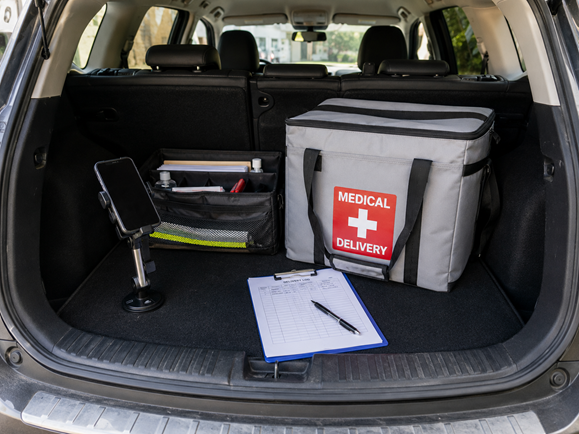
And invest in proper equipment from the start — rigid, insulated medical coolers, a digital thermometer for temperature-sensitive payloads, a reliable clipboard, a phone mount, and a spill kit in your trunk. Having this on hand isn’t just about doing the job well; it’s what lets you handle a surprise inspection or a client audit smoothly instead of scrambling.
Quick Answers to Common Questions
What is a medical courier, in simple terms?
Someone who transports time-sensitive, often biological or confidential medical materials — lab specimens, pharmaceuticals, blood products, medical equipment, or patient records — between healthcare facilities like hospitals, labs, and pharmacies.
Do I need a college degree to become a medical courier?
No. Most companies care far more about a clean driving record, a reliable vehicle, passing a background check, and holding basic HIPAA and Bloodborne Pathogens certification than any formal degree.
How much do medical courier jobs actually pay?
W-2 roles typically run $15 to $22 an hour. Independent 1099 contractors can earn $75 to $200-plus per route, or $0.60 to $1.00-plus per loaded mile, with urgent stat deliveries paying a premium — though contractors need to subtract fuel, vehicle wear, insurance, and self-employment taxes to know their real take-home pay.
Is it better to work as a W-2 employee or a 1099 independent contractor?
W-2 roles suit beginners who want guaranteed hours and less financial risk while learning the field. 1099 contracting offers more flexibility and higher earning potential but comes with real out-of-pocket costs and tax responsibilities you need to plan for from day one.
Where are the best markets for medical courier jobs?
Cities with dense hospital and lab networks — Houston, Atlanta, and Las Vegas among them — tend to have the steadiest demand, though smaller markets with a hospital or major lab presence can still offer solid, consistent work.
Is This Side Hustle Actually Worth It?
I think the honest answer is: yes, genuinely, but not for the reasons the viral videos suggest. This isn’t a get-rich-quick gig — it’s a legitimate, flexible logistics job with real earning potential once you understand the actual pay structures, subtract your real costs, and build up a track record with reliable clients or platforms. Get your HIPAA and Bloodborne Pathogens certification first, decide whether W-2 stability or 1099 flexibility fits your situation better, widen your job search beyond the obvious title, and go in with realistic numbers instead of a viral video’s version of the math. That’s how you actually build this into something sustainable.