Budgeting for Groceries Without Giving Up Healthy Meals
I used to think budgeting for groceries meant one of two things: either you’re eating rice and beans out of survival, or you’re just not trying very hard to save money. Turns out I was wrong on both counts. After digging through a mountain of USDA data, dietitian advice, college budgeting guides, and honestly way too many Reddit threads about people’s weekly grocery hauls, I landed on the same conclusion nearly every expert source does: eating well on a budget isn’t about deprivation. It’s about strategy.
The people who spend the least while eating the healthiest aren’t cutting corners on nutrition. They’re planning meals before they shop, buying protein smartly, and using a small toolkit of habits that repeat every single week. That’s really it. No secret hack, no extreme couponing life. Let’s get into what actually works.
Why Grocery Budgeting Feels So Much Harder Than It Used To
If it feels like your grocery bill has crept up even though you’re buying the exact same stuff, you’re not imagining it. Food prices are roughly 34.6% higher than they were back in 2019, driven by higher production costs, supply chain issues, and tariffs, according to NerdWallet data cited by Food Republic. Other sources put the increase since 2020 north of 27%.
On top of that, healthy food genuinely does tend to cost more than the calorie-dense, processed alternative — a diet built around fruits, vegetables, and lean proteins is almost always going to run higher than one built around pasta and frozen dinners. That’s not you failing at budgeting. That’s just where prices are right now.
But here’s the reframe that changed things for me: registered dietitians at Culina Health put it simply — a little bit of knowledge and preparation is enough to plan nutritious, balanced meals without blowing your budget. It’s a strategy problem, not a money problem. Once I started treating it that way, the whole thing got a lot less stressful.
If you want to learn common budgeting mistakes to avoid, read this article: https://loonnews.com/common-budgeting-mistakes-and-how-to-avoid-them/
How Much Should You Actually Budget for Groceries Per Month?
This is probably the question that brought you here, and I’ll be honest — there isn’t one single “correct” number. But there is a useful range, and knowing where you sit inside it can take a lot of the guesswork out of budgeting for groceries.
The USDA Benchmark (The Closest Thing to an Official Number)
The USDA publishes four official food spending plans — Thrifty, Low-Cost, Moderate-Cost, and Liberal — and nearly every financial site anchors its advice to these. According to Ramsey Solutions, the USDA estimates $302 to $580 per month for a single person, $624 to $1,000 for a couple, and $1,013 to $1,668 for a family of four, depending on which tier you fall into. The average American household spends about $519 a month on groceries, or roughly $6,224 a year.
PocketGuard’s more recent breakdown adds some nuance by gender and age: a single adult on a moderate plan spends somewhere between $392 (for women) and $465 (for men, who typically need more calories), while the thrifty version drops as low as $297 to $323.
What People Actually Spend (Real-World Averages)
Real spending tends to land close to, or a bit below, those moderate USDA numbers. Instacart’s 2026 data pegs the national average at about $365 per person monthly, with big regional swings — households in Hawaii can spend over $1,500 a month, while households in states like West Virginia might spend closer to $770 to $850 for the whole household.
The 10–15% Rule (My Favorite Because It Actually Adapts to You)
Instead of chasing a flat dollar figure, a lot of financial experts recommend budgeting food — groceries plus eating out — as 10 to 15% of your take-home pay. Credit Karma actually suggests starting even more conservatively at 10% and adjusting up if needed. I like this rule because it scales with your life instead of pretending everyone’s income and household look the same.
My honest take: if you’re looking for a simple starting point, aim for somewhere between $250 and $450 a month for one person, then adjust based on your income, location, and how much you cook versus eat out. And a quick heads-up — when you see people online quoting really low “grocery budgets,” double check whether they’re including takeout and dining out separately, because a lot of viral numbers quietly blend the two together, which makes true grocery costs look smaller (or dining costs look bigger) than they really are.
Budgeting for Groceries as a College Student
I remember my own college grocery budget being basically whatever was left over after rent and textbooks, which is not a strategy I’d recommend to anyone. The research backs up that this age group needs its own playbook, because the numbers and the constraints are genuinely different.
According to the Education Data Initiative (via eCampus), the average college student spends just under $600 a month on all food combined — meal plans, eating out, and groceries — but the grocery-only portion is closer to $260 a month, with most students landing somewhere between $180 and $320. A first-person essay from a self-described “broke college student” on Her Campus described an even tighter budget of $50 to $100 a month, which honestly sounds brutal but isn’t unheard of for students living lean.
A few tactics come up again and again specifically for students:
Compare the true cost of an on-campus meal plan against cooking for yourself — depending on your dining hall options, the meal plan might actually save you money once you factor in your time and the cost of stocking a kitchen from scratch. Keep a running total on your phone’s calculator while you shop so there’s no surprise at checkout. Cook with recipes that share ingredients (chicken, beans, and rice show up in a hundred different meals) so you’re not buying a bunch of single-use products. Use a cash-back app like Ibotta, where you scan your receipt after shopping to get money back on select items. And if you’ve got roommates, split the cost of shared staples like milk, butter, or coffee, and take turns cooking so nobody’s stuck making dinner every single night.
CU Boulder’s student-life page also has a genuinely great tip for stretching flavor and nutrition on the cheap: doctor up instant noodles with vegetables and a protein source, or top cereal with frozen berries. And if things get tight, most campuses have a free dietitian appointment available, plus food banks or mobile pantries — worth knowing about before you’re in a real crunch. If you’re building your first student budget from scratch, our guide at loonnews.com/first-budget-for-college-students walks through the whole thing step by step.
Budgeting for Groceries for One Person
Cooking for one is its own animal, and honestly, one of the more interesting things I found in the research wasn’t even about money — it was about motivation. A University of Connecticut student health guide made a point that stuck with me: cooking for one person can feel kind of sad and unmotivating, so it helps to cook with or for others sometimes, trading off meals with a friend so you’re not always eating alone in a quiet kitchen. I didn’t expect a grocery-budgeting resource to touch on that, but it’s true, and it’s probably part of why so many solo households end up ordering takeout instead of cooking the groceries they already bought.
On the numbers side, most sources land in a similar range: somewhere around $300 to $400 a month is a common, comfortable ballpark for one person, though GOBankingRates found the range stretching anywhere from $290 to $548 depending on location, diet, and habits.
The trick with cooking for one isn’t just spending less — it’s avoiding waste, since bulk deals don’t always make sense when there’s only one mouth to feed. A few things genuinely help here. Buy proteins and staples in bulk when they’re on sale, but portion and freeze them immediately instead of letting them sit in the fridge hoping you’ll use them in time. Batch-cook soups, stews, or casseroles and freeze individual portions, so you get variety through the week without cooking every single night. Choose recipes that reuse the same core ingredients so nothing goes bad before you can finish it. And when it makes sense, buy the less-processed, whole version of something — a block of cheese instead of the pre-shredded bag — since it’s almost always cheaper per ounce.
The Universal Playbook: Tips That Work No Matter Your Household
This is the part where the advice from dietitians, financial sites, and university nutrition programs all converges — and it’s honestly the section I’d bookmark if I were you.
Meal plan before you shop. This is, without exaggeration, the single most repeated tip across every source I found. Utah State University Extension calls it the number one tip for eating healthy and saving money — even if all you plan is dinner, it makes a real difference. Chesapeake Regional Healthcare puts it bluntly: walking into a store without a plan is a recipe for a budget disaster.
Plan around what’s on sale, not the other way around. Instead of picking a recipe first and hoping the ingredients are cheap, check your store’s weekly flyer or app first. If chicken and sweet potatoes are discounted, that’s your dinner. This flips the usual approach and consistently saves more.
Actually make a list — and use it. Here’s a stat that surprised me: 85% of self-made millionaires in Ramsey Solutions’ National Study of Millionaires use a grocery list. That reframes list-making as a wealth-building habit, not just a broke-college-student trick.
Never shop hungry. I know this sounds like a cliché, but there’s real data behind it — hungry shoppers without a list gravitate straight toward the junk food aisle.
Check the unit price, not the sticker price. Bigger packages usually cost less per ounce or pound, but not always, so glance at the shelf tag’s per-unit price before assuming bulk is cheaper.
Buy store brand over name brand. Ramsey Solutions found this can save anywhere from 5% to 72%, depending on the item — which is a wild range, but even the low end adds up over a year of shopping.
Don’t skip frozen and canned produce. This one’s a genuine myth-buster. Frozen produce without added sauces, and canned goods packed in water instead of syrup or heavy sauce, deliver just as much nutrition as fresh — often for a fraction of the cost, and with way less waste since it doesn’t spoil in your crisper drawer.
Diversify your protein sources. Protein is usually the priciest part of the cart, so this is where the real savings live. Dried beans, lentils, and chickpeas are nutritional powerhouses for a fraction of what meat costs — a cup of lentils has around 18 grams of protein, cooks in 20-25 minutes, and needs no soaking. On the animal-protein side, chicken thighs (especially bone-in, skin-on) are cheaper and arguably more flavorful than breasts. Canned tuna, sardines, and anchovies beat fresh fish on price. Pork loin and tenderloin are lean and budget-friendly, and cottage cheese is a high-protein, low-calorie option that also freezes well if you catch it on sale. Worth noting: egg prices have climbed in recent years, so I wouldn’t lean on eggs as an automatically “cheap” protein the way people used to.
Shop seasonally. In-season produce is cheaper because it’s more plentiful, and it usually tastes better too. Even something as humble as cabbage — often just a couple dollars a head and good in the fridge for two to three weeks — can stretch across soups, slaws, and taco fillings without watering down the meal.
Batch cook and freeze leftovers. This shows up in almost every source, and for good reason. Cooking a big pot of soup or a casserole once and freezing portions gives you built-in variety and portion control, and it makes last-minute takeout way less tempting on a tired weeknight.
Reduce waste on purpose. Store leftovers in airtight containers, freeze what you won’t eat in the next couple of days, and plan meals that reuse ingredients. One source estimated that combining planning, smart shopping, and waste reduction can save over $1,000 a year — which is a genuinely meaningful number for most households.
Try the cash or prepaid card system. This is basically the classic envelope budgeting method applied to food — withdraw your grocery budget in cash weekly, or load it onto a prepaid card with a hard limit. It’s a simple way to make overspending physically harder rather than relying on willpower alone. If you want to go deeper on this style of budgeting, check out loonnews.com/envelope-budgeting-method for a full breakdown.
Cook from scratch when you can. A frozen pizza might run you $8–10, while a homemade one with fresh ingredients can cost closer to $3–5. These swaps feel small individually but add up fast over a month of meals.
Build a spice collection gradually. Bland “budget food” is a real reason people quit healthy grocery budgets in favor of pricier convenience meals. Buying a couple of herbs or spices each week, rather than all at once, keeps meals interesting without a big upfront cost — and it’s a big part of why the meals stay sustainable long-term instead of feeling like a punishment.
What’s the Best App for Budgeting Groceries?
I get asked this one a lot, and honestly the answer depends on whether you want something dedicated to groceries specifically or something that folds into your overall budget.
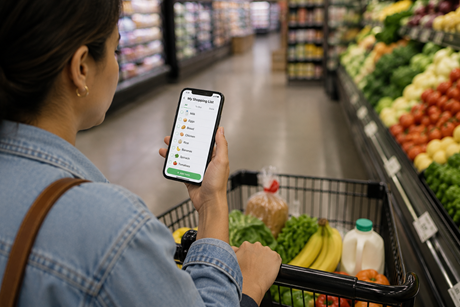
For dedicated grocery budgeting and list apps, WalletHub’s 2026 roundup names AnyList, Listonic, and Shop Calc as its top three, largely because they let you estimate your total spend before you even get to the register. AnyList’s free version lets you build and share shopping lists and organize items by category, while the paid AnyList Complete adds monthly spending-planning tools. Food Republic’s list expands the options further with Mealime, Flipp, and GoodBudget, each suited to slightly different needs — Flipp is great if you specifically want to match your meal plan to weekly store sales.
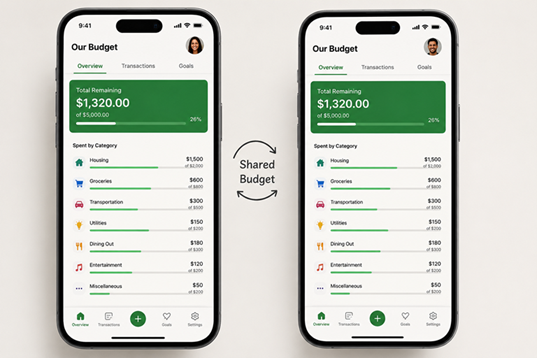
A newer app worth mentioning is Groceries Tracker, which takes a receipt-scanning approach — it sorts every item and price automatically and compares store prices to help you cut your bill. It also markets itself around not selling user data, which is a nice trust signal if data privacy matters to you, and it’s built for households to track spending together so nothing slips through unnoticed.
If you’re not big on apps or don’t want another subscription, Food Republic makes a solid case for a DIY Google Sheets template — fully customizable, automated with formulas, and completely free. You can build in recipe tabs, pull ingredients straight into a shopping list, and even set up graphs if you’re the type who likes to see your spending trends visually.
And if you just want cash back rather than a full budgeting system, receipt-rebate apps like Ibotta let you scan your receipt after shopping to get money back on select items — not a budgeting tool exactly, but a nice complement to one.
A Sample $400/Month Budget Breakdown
If you want something concrete to work from rather than just a range, here’s a simple single-person monthly template that lines up well with USDA nutrition guidance: fruits and vegetables around $150, proteins around $100, whole grains around $50, dairy and alternatives around $50, healthy snacks around $30, and about $20 left over for miscellaneous items — landing at roughly $400 total. You can scale this up or down depending on where you land in the ranges we covered earlier.
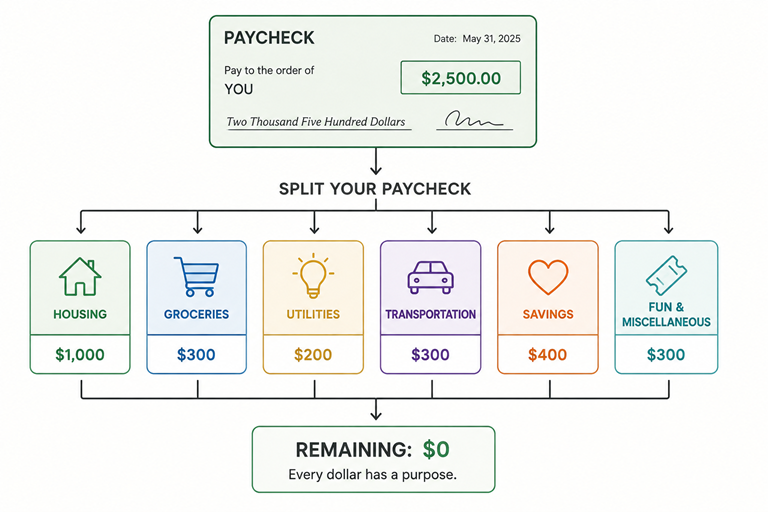
This also fits neatly into the broader 50/30/20 budgeting framework, where groceries fall under the “needs” category that should take up around 50% of your take-home pay alongside things like rent and health insurance. If you haven’t set up a full household budget yet, loonnews.com/50-30-20-budget-explained is a good next read.
The Bottom Line
There’s no universal “right” number for budgeting for groceries. Whether you’re feeding just yourself, splitting costs with a partner, figuring out groceries for one person on a tight income, or trying to survive as a college student on ramen and good intentions, the goal isn’t to hit the lowest possible number — it’s to find a number that’s sustainable for your income and still supports how you actually want to eat.
Start with a realistic range based on your household size, plan your meals before you shop instead of after, lean on beans and frozen produce more than you probably think you should, and use whatever tracking system — app or spreadsheet — that you’ll actually stick with. That’s genuinely the whole formula. No extreme couponing required.