How to Build a $1,000 Emergency Fund When You Live Paycheck to Paycheck
I remember doing math on a napkin one night — rent, minimum card payment, gas, groceries — and realizing there was exactly $11 left before my next paycheck. Eleven dollars. And then my car made a noise it had never made before, and I genuinely didn’t know what I was going to do if it broke down completely. That was the night I stopped believing “just save more” was useful advice and started looking for a way to actually save money when broke, not in theory, but in the next 30 to 60 days.
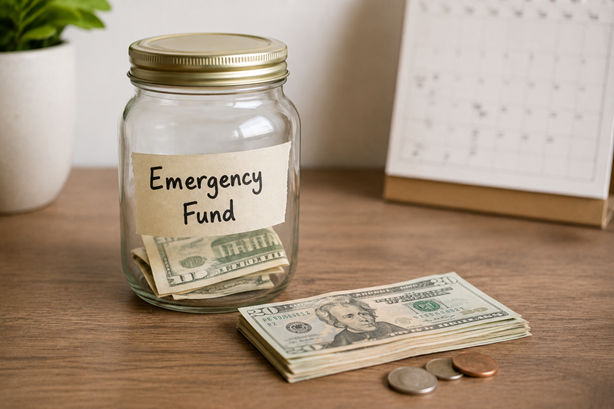
If you’re here because you’re living paycheck to paycheck and the standard advice of “save three to six months of expenses” feels like a cruel joke when you have zero dollars in savings right now — I get it, and this guide isn’t going to tell you to do that. This is a realistic emergency fund starter guide built around a much smaller, much more achievable target: $1,000. Not because $1,000 fixes everything, but because it’s enough to stop one flat tire or one broken water heater from turning into a payday loan or an overdraft spiral.
Why “Cut Your Latte” Advice Doesn’t Work Here
I want to say this plainly, because it matters: if you’re already skipping meals or brewing the cheapest coffee you can find out of necessity, being told to “cut out luxuries” isn’t just unhelpful — it’s a little insulting. There’s no latte to cut. That advice was written for a different income bracket entirely, and pretending otherwise sets people up to feel like they’re failing at a task that was never actually solvable through discipline alone.
There’s also a scale problem worth naming. If you’re saving 20% of a genuinely tight income, that might come out to $50 a month, which makes even a $1,000 goal feel like it’s a year and a half away. And living paycheck to paycheck exposes you to a whole extra layer of cost that higher earners never deal with — overdraft charges, check-cashing fees, high-interest payday loans — all of which actively drain your money faster than you can save it. Researchers actually have a name for the mental toll of this: scarcity mindset, where every single spending decision requires real cognitive effort because there’s no slack to absorb a mistake.
So the answer isn’t a punishing lifestyle overhaul. It’s a short, aggressive sprint — focused entirely on finding hidden cash flow and using windfalls to cross the $1,000 line as fast as possible, then stopping the sprint once you’re there.
Step 1: Separate Your Emergency Fund From Everything Else
Before you save a single dollar, decide where it’s going to live, because this matters more than people expect. If your emergency money sits in your regular checking account, it doesn’t feel like savings — it feels like available balance, and available balance has a way of quietly getting absorbed into groceries or a spontaneous purchase before you even notice.
Open a separate account specifically for this — a free online high-yield savings account or a credit union account works fine. Don’t link it to your everyday debit card, and if temptation is a real issue for you, don’t even put the app on your phone. You want it to take two or three business days to move money back to checking. That friction isn’t inconvenience for its own sake — it’s what stops an emotional, impulsive withdrawal at 11pm on a rough night.
When you’re choosing an account, make sure it has zero monthly maintenance fees and no minimum balance requirement. A lot of traditional big-bank accounts will charge you $10–$15 if your balance dips below a threshold, which completely defeats the purpose of a starter emergency fund — you’d be paying a fee to save money.
Step 2: Find the Cash That’s Already Hiding in Your Budget
You can’t save your way to $1,000 purely by cutting back when your margin is already this thin — you have to actively hunt for leakage. Pull your last 30 days of bank statements and go through them with real intention.
Purge Subscriptions and Negotiate Fixed Bills
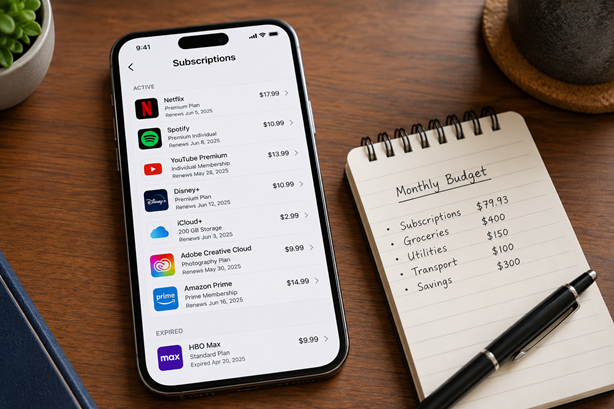
Look hard at streaming services, gym memberships, and app subscriptions you’re paying for but not really using. Canceling even three of them can free up $30 to $50 a month almost instantly. If you want a full, systematic way to hunt these down — including the ones hiding in app stores and old free trials you forgot about — I’ve written a complete 30-minute audit process here: loonnews.com/how-to-track-forgotten-subscriptions.
Then call your internet, insurance, or phone provider and ask for a lower rate — mentioning you’re considering switching to a budget competitor genuinely works more often than people expect. Companies would rather apply a retention discount than lose you entirely, and this single phone call can take fifteen minutes and save you real money every month going forward. For a deeper breakdown of exactly how to run this conversation, I’ve covered the full negotiation process here: loonnews.com/how-to-reduce-stop-overspending.
Try a Pantry Challenge Week
Food is usually the most flexible line item once your fixed housing costs are locked in, so for the first week of your savings sprint, try eating strictly out of what’s already in your pantry, freezer, and cupboards. Buy zero groceries for seven days. It sounds extreme, but it forces you to actually use up the backlogged food you’ve already paid for, and whatever you would have spent on groceries that week goes straight into your emergency fund instead.
If you need to stretch further, shift temporarily to high-calorie, low-cost staples — rice, beans, oats, eggs, frozen vegetables. This isn’t meant to be your permanent way of eating. It’s a short, intentional sprint, not a lifestyle.
Step 3: Bring In Fast Cash — This Is Where the Real Speed Comes From
Cutting expenses can only take you so far when your income is already low. To hit $1,000 within 30 to 60 days, you’ll likely need to temporarily boost your income, not just trim your spending. Here’s roughly what different methods can realistically bring in:
| Method | Estimated Return |
|---|---|
| Decluttering / reselling items | $150–$400 (fast turnaround via apps) |
| Food or package delivery gig work | $75–$200 per week |
| Plasma donation | $200–$500 in your first month |
| Micro-gigs / local labor | $50–$150 per weekend task |
Sell What You’re Not Using
Look around your place honestly. Old electronics, an instrument you haven’t touched in years, clothes still sitting there with tags on, a duplicate kitchen appliance. Facebook Marketplace, OfferUp, and Poshmark all work well for local, fast, cash-in-hand or direct-deposit sales. Selling just three unused items — an old phone, a bike, a gaming console — can net you $200 to $500 almost immediately, which alone might get you a third or more of the way to your goal.
Pick Up Short-Term Gig Work
If you have a reliable vehicle, evening and weekend gig work is one of the fastest bridges to $1,000 that exists. Food and grocery delivery apps like DoorDash, Instacart, and UberEats often let you cash out daily through instant-pay features — and the key move here is directing 100% of that money straight into your separate emergency account, not your regular checking account, so it never gets absorbed into everyday spending. Package delivery through Amazon Flex offers block shifts with fairly predictable hourly pay, often somewhere in the $18–$25/hr range.
Try a One-Time Side Hustle
You don’t need a new skill for this — lean on what you already know how to do. Offer yard care, house cleaning, pet-sitting, or tutoring to neighbors. A post in a local Nextdoor group or community Facebook page offering a flat rate for a specific task (mowing a lawn, organizing a garage, watching a dog for a weekend) can bring in real money fast, especially if you’re specific about what you’re offering rather than vague.
If you want a broader menu of fast-cash and income-boosting tactics beyond this specific $1,000 sprint, I’ve written more on that here: loonnews.com/how-to-save-money-fast.
Step 4: Protect Your Progress Once It Starts Building
Emergencies have an uncanny habit of testing your resolve right before you hit your goal, so it’s worth being deliberate about protecting what you’re building.
Here’s the rule I’d want you to actually tape to your fridge: your $1,000 starter fund is sacred. It’s not for holiday gifts, concert tickets, a vacation deal, or a spontaneous purchase that feels justified in the moment. It exists for one purpose — true emergencies. Keeping the lights on. Keeping your car running so you can get to work. Covering an urgent medical need. That’s it. The moment you start dipping into it for non-emergencies, it stops functioning as a safety net.
If your payroll allows it, split your direct deposit so that $10 or $20 goes straight into your savings account automatically before you ever see it. This is the classic “pay yourself first” principle, and it works because it removes the decision entirely — you’re not relying on willpower to transfer money you might otherwise talk yourself out of moving.
Step 5: Get Through the “Struggle Bus” Phase Without Burning Out
I won’t pretend this sprint is easy. Saving aggressively on a low income is genuinely emotionally draining, and burnout is real — especially the first time an unexpected bill shows up mid-sprint and threatens to derail everything you’ve built.
A few things that helped me get through it, and that show up consistently across community-tested strategies: make your progress visual. Draw a simple thermometer chart on a piece of paper, or use a basic tracker, and color in a block every time you add $50. There’s something genuinely motivating about watching a visual bar fill up that a bank app number just doesn’t replicate the same way.
Remind yourself, often, that this is temporary. A no-spend week or a two-week gig-work sprint is not your new permanent lifestyle — it’s a short, intense push to buy yourself long-term peace of mind. And celebrate the milestones, even the small ones. Hitting your first $100 from a completely empty starting point is a real, legitimate win. Acknowledge it without spending money to do so — watch a favorite movie at home, take a walk, call someone who’ll be genuinely happy for you.
What About Assistance Programs and Longer-Term Budgeting?
I want to be honest about something: a $1,000 sprint is a starting point, not a complete financial plan. If you’re consistently coming up short every single month, not just facing a one-time emergency, it’s worth looking into whether you qualify for assistance programs you might not know about — food assistance, utility assistance, or local emergency aid funds. Checking your eligibility is a legitimate budgeting move, not a failure, and I’ve written a much deeper guide on this exact triage-and-assistance approach here: loonnews.com/how-to-budget-money-on-a-low-income. For general guidance on where to start looking, the Consumer Financial Protection Bureau’s resources for people facing financial hardship are a solid, trustworthy place to check.
Quick Answers to Common Questions
How fast can I realistically save $1,000 on a low income?
Most sources and community accounts point to somewhere between 30 and 60 days when you combine an aggressive expense audit with short-term gig work or reselling items — faster if you have items worth $200+ to sell right away, slower if you’re relying purely on small weekly gig earnings.
Should I pay off debt first, or build the $1,000 fund first?
The near-universal advice from personal finance frameworks like Ramsey Solutions is to build this small starter fund first, even before aggressively attacking debt, specifically because it prevents a new emergency from creating new high-interest debt while you’re trying to pay off old debt.
What if an emergency hits before I reach $1,000?
Use what you have if it’s a genuine emergency — that’s exactly what the fund is for, even partially built. Then restart the sprint from wherever your balance lands, rather than treating the interruption as a failure of the whole plan.
Is it okay to use gig work or plasma donation just temporarily?
Yes — these are described across financial guidance as short-term, sprint-specific tactics to cross the finish line faster, not permanent income strategies. Once you hit $1,000, most sources recommend stepping back from the aggressive pace and returning to a more sustainable, regular budgeting rhythm.
You’re Closer Than It Feels Right Now
Building a $1,000 emergency fund on a low income isn’t about sophisticated investing or complicated financial strategy. It’s resourcefulness, a bit of short-term sacrifice, and a plan that actually fits your real situation instead of one built for someone with more slack in their budget. Audit your cash leaks, sell what you’re not using, pick up short-term gig work if you can, and lock the money away somewhere it can’t quietly disappear back into everyday spending.
Once that $1,000 is sitting safely in a separate account, something genuinely shifts. You’re no longer one flat tire away from a full-blown financial crisis. You’ve built your first real line of defense — and that’s not a small thing. It’s the foundation everything else gets built on top of.