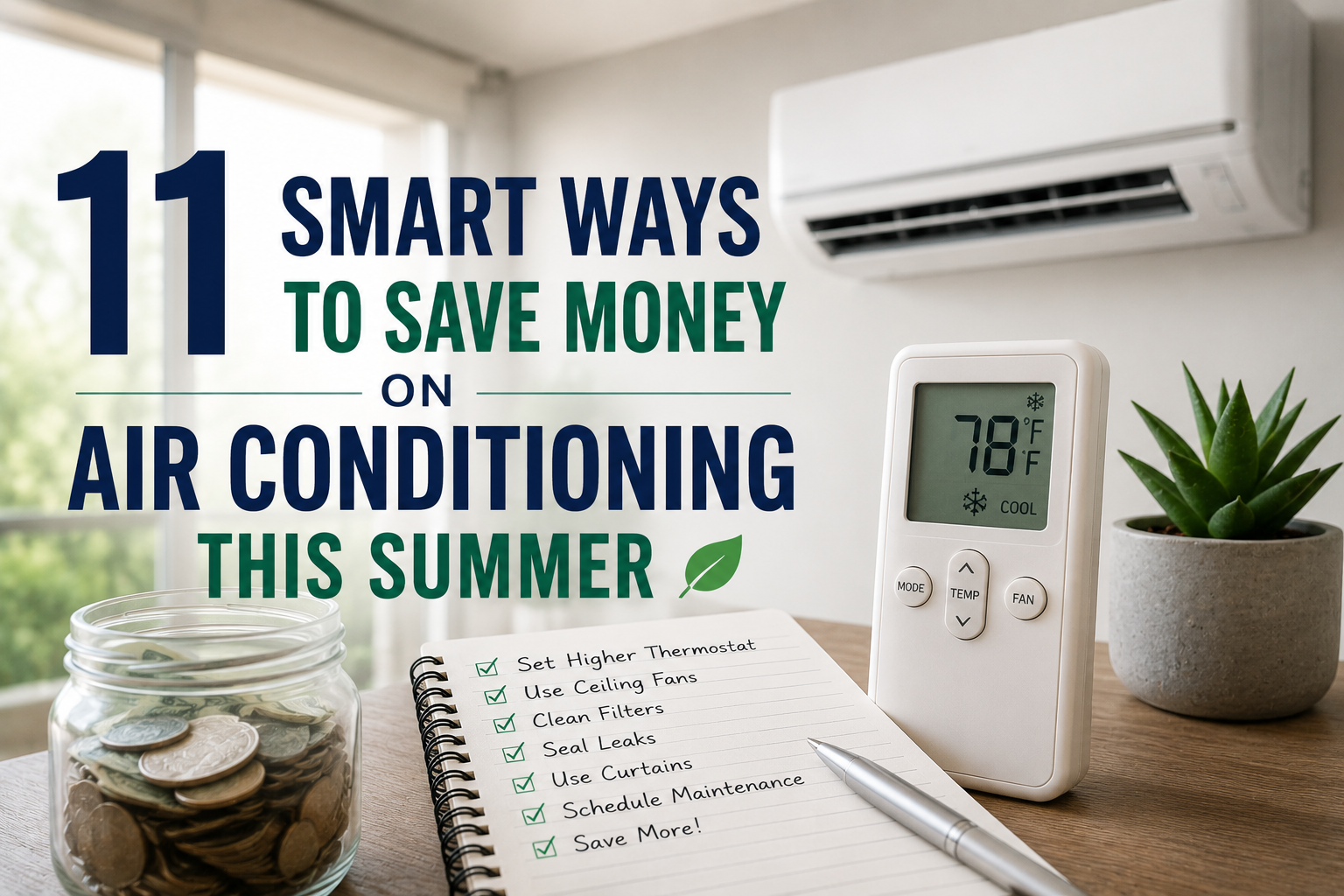
11 Smart Ways to Save Money on Air Conditioning This Summer
While air conditioners can definitely help keep you cool and comfortable in extreme summer heat, they can also add up quite a bit to your power bill. When air conditioning temperatures climb, many homeowners will ask themselves how to economize on air conditioning costs while still enjoying comfort. There is a good news here – you don’t need to compromise on staying cool, and maintaining low energy bills.
There are also simple things you can do at your home to lower your monthly bills.Some simple adjustments in your habits, home maintenance and cooling system use can help you save money in your monthly cooling costs. Regardless of whether you have a central air conditioning system, a window unit or a ductless mini-split system, there are a number of practical strategies to keep your home cool while lowering your cooling costs.
In this guide, you will learn some effective tips to help you reduce your air conditioning cost and enhance the energy efficiency of your house.
Why Air Conditioning costs so much?
Air conditioners use a lot of electricity, particularly in the summer months.
There are a number of factors that influence cooling expenses:
- Outdoor temperatures
- Home insulation
- Air conditioner efficiency
- Thermostat settings
- Home size
- Humidity levels
- Maintenance practices
Once you have an understanding of these factors you can see how you can save some money.
1. Adjust the thermostat setting
The simplest method of lowering cooling expenses is to set your thermostat a bit higher.
Many set their thermostats too low and have their system run longer and use more electricity.
Even a slight change can:
- Reduce energy consumption
- Lower monthly bills
- Minimize system wear and tear
The aim is to determine a comfortable temperature that will be neither too cold nor too hot.
2. Use a Programmable or Smart Thermostat
A programmable thermostat can be programmed to adjust temperatures automatically according to your schedule.
Benefits include:
- When no one is home, the air conditioner will cool less.
- Automatic temperature adjustments
- Improved energy efficiency
- Lower utility costs
Smart thermostats can adapt to your usage and improve cooling schedules with time.
3. Replace Air Filters on a regular basis
Dirty air filters make your air conditioner more difficult to function.
Limited air flow can cause:
- Higher energy use
- Reduced cooling performance
- Increased system strain
Regular filter replacement and cleaning leads to better efficiency and indoor air quality.
4. Insulate Air Ducts and Other Spaces
Even small gaps and cracks allow cool air to pass through.
It’s best to check the following shared spaces:
- Doors
- Windows
- Attics
- Utility openings
- Ductwork
Closed leaks to keep conditioned air from escaping and make your cooling system more efficient.
5. Use Ceiling Fans
Using ceiling fans can help to circulate cool air better.
Benefits include:
- Improved comfort
- Better airflow
- Decrease in AC dependence.
Fans consume much less power than ACs and can be used as a cost-effective supplement.
6. Keep heat out of your house
Heat gain can be substantial, and can be eliminated if possible.
Consider using:
- Curtains
- Blinds
- Blackout shades
- Reflective window coverings
Sunlight filtering during the hottest hours can help to keep a home cooler.
7. Keep up Your Air Conditioning System
To maintain performance and efficiency.
Possible maintenance activities can include:
- Cleaning coils
- Checking refrigerant levels
- Inspecting electrical components
- Caring for the outdoor air conditioners and their areas by removing debris from them.
An efficient and properly maintained system can run for longer periods.
8. Improve Home Insulation
Insulation is a way to retain cooler air during summer time.
Other locations that might require extra insulation are:
- Attics
- Walls
- Crawl spaces
- Duct systems
Improper insulation allows heat to flow in and out of the home, causing a fluctuation in indoor temperature.Poor insulation will let the heat escape from the interior of a home into the exterior, and vice versa.
9. Do not perform heat producing activities during peak hours
There are many other activities around the home, which add to the heat.
Examples include:
- Cooking with ovens
- Using clothes dryers
- Running dishwashers
If you do these things during cooler time of the day, it will help reduce the strain on your air conditioning system.
10. Get a more energy-efficient air conditioner
Older systems typically use more electricity than modern systems.
When looking for an energy-efficient model, you can expect to get:
- Lower operating costs
- Improved cooling performance
- Better humidity control
- Reduced environmental impact
The initial cost is a downside of replacement, but savings in the building’s energy use can be significant.
11. When possible, use Zoned Cooling?
Not all rooms need to be the same temperature for cooling.
If a homeowner installs zoned cooling, he or she can:
- Cool, as necessary, only occupied areas
- Reduce energy waste
- Improve comfort
- Lower electricity bills
Any unused rooms or zoned systems can help to increase overall efficiency.
Avoiding the Common Mistakes that Cause Higher Air Conditioning Costs
There are a lot of people who don’t realize they are wasting energy for their homes.
Set the Thermostat to an Extremely Low setting
Doing it at a lower setting does not reduce the cooling rate in the home. They just make the system run for an extended period of time.
Ignoring Maintenance
When equipment is not well maintained, it can be much less efficient and be more expensive.
Leaving Windows Open
Cool air can “go down the vent” while warm air can “go up the vent.
Blocking Air Vents
Furniture and curtains can block air flow and decrease system performance.
Keeping the system active all the time
Proper scheduling and the use of smart controls can limit unneeded operation.
How Much Can You Save?
Actual savings will vary based on:
- Climate
- Energy rates
- Home size
- Cooling habits
- Equipment efficiency
People often discover they can most easily obtain good energy savings by using a number of energy saving measures.
Any little step counts over the entire cooling season
Reduce the use of air conditioning for the following environmental benefits
The reduction of electricity use not only translates to monetary savings, it also helps the environment.
Energy conservation is a good idea to help:
- Avoid increasing the release of greenhouse gases.
- Lower electricity usage.Minimize electricity loads.
- Help promote energy saving practices.
There are benefits to efficient cooling other than what you’ll see on your utility bill.
The Air Conditioning Savings Plan involves creating a plan
If you’re looking for a steady savings plan, then come up with a simple plan.
Focus on:
- Thermostat management
- Regular maintenance
- Home insulation improvements
- Energy-efficient habits
Keeping track of Utility bills can be used as a yardstick to measure progress and determine other areas for savings.
Conclusion
Saving money on air conditioner doesn’t mean sacrificing. A few simple adjustments to your thermostat and cooling system, as well as some new insulation, sealing air leaks, and energy-efficient habits can save you a lot of money on cooling without sacrificing comfort.
Best practice is to mix a number of strategies rather than one, and to incorporate a variety of strategies into one. These little things can add up and make a big difference over the years, and it makes your home run more efficiently.
FAQS
Which is the most efficient method of air conditioning cost savings?
Setting the thermostat up a few degrees higher and using ceiling fans can deliver an instant energy saving.
Do smart thermostats save money?
Yes. Smart thermostats can save energy by automatically adjusting temperatures to your schedule.
How often does one need to change air conditioner filters?
Many filters need to be monitored monthly and replaced / cleaned as necessary.
Is insulation a way of lowering cooling expenses?
Yes. Proper insulation will help to keep the cool air in the house and to decrease the cooling load of an air conditioning system.
Is it cheaper to run the air conditioner 24 hours a day?
As long as possible, the use of programmable settings and cooling only when necessary are more energy efficient than running the cooling system at all times.